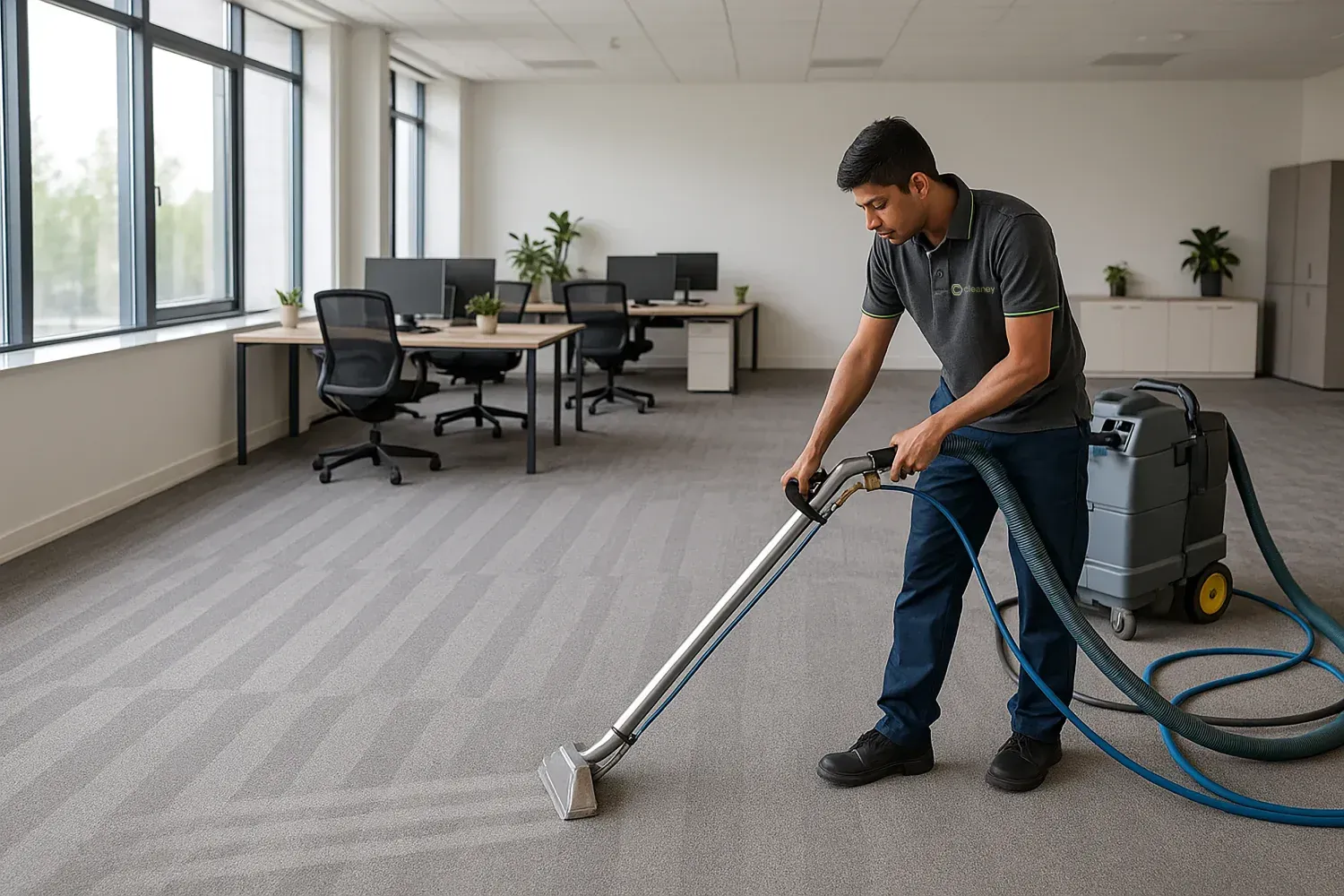
This guide gives facilities and property teams a clear, traffic‑based maintenance plan for commercial carpet: spot cleaning for immediate spills, interim methods to control surface soiling, and hot‑water extraction for deep soil. It highlights Australian guidance and safety considerations so you can align cycles with carpet type, warranties and operational needs.
Actionable summary: react quickly to spills (spot clean immediately), schedule interim surface cleaning to manage daily wear, and plan extraction cleaning to remove embedded soil. Adjust frequencies to carpet traffic, site conditions and manufacturer guidance; the ranges below are illustrative starting points only.
Traffic‑based maintenance table (illustrative examples — final cycles must be tailored to site conditions and manufacturer instructions, and validated by on‑site trials and soiling audits):
Note: AS/NZS 3733 provides procedural guidance but does not prescribe universal timings; the carpet manufacturer's warranty and recommendations take precedence for specific methods and intervals. For commercial carpet options see commercial carpet cleaning.
Regular maintenance reduces visible soiling, slows fibre wear and can be more cost‑effective than reactive replacement. The Australian Government Department of Health provides general guidance on routine environmental cleaning for hygiene in commercial settings (not carpet‑specific frequencies). AS/NZS 3733:2015 outlines procedures and recommended practices for cleaning textile floors; it does not set one‑size‑fits‑all cycle timings. A planned cycle balances appearance, occupant comfort and lifecycle cost and should be tailored to site conditions.
Timing and purpose: Spot cleaning targets fresh spills and small stains to help prevent set‑in marks and odours. Rapid response increases success.
Practical steps for staff (typical industry practice informed by AS/NZS 3733 procedures; not regulatory requirements):
Recommended product categories (procurement guidance):
Confirm product choice against the carpet manufacturer’s guidance and the product SDS. Safety and compliance: follow Safe Work Australia guidance on chemical handling, provide PPE (gloves, eye protection) and keep SDS accessible. Train staff on spill‑response, waste disposal and ventilation. Also ensure compliance with work health and safety laws administered by your state/territory regulator.
Purpose: Interim cleaning manages surface soil and appearance between deep cleans. It’s typically quicker and less disruptive than extraction but doesn’t remove deeply embedded contaminants.
Common interim methods and suitable use‑cases:
Frequency guidance by traffic (illustrative only; validate against manufacturer guidance and site trials):
Operational notes: interim methods dry fast, but plan a scheduled extraction cycle to remove the soil these methods dislodge to avoid gradual soil build‑up. Check product compatibility with fibre and any flame‑retardant or backing treatments in your carpets.
What hot‑water extraction does: it injects heated cleaning solution under pressure and extracts it with vacuum to remove embedded soil, residues and many allergens. It is a recognised deep‑clean approach and AS/NZS 3733 describes relevant procedures; confirm specific extraction parameters with the carpet manufacturer.
Benefits and limitations:
Suggested extraction frequencies (illustrative only; manufacturer instructions and on‑site soiling rates prevail):
Limitations: hot‑water extraction is not appropriate for all carpets (check manufacturer guidance). Excessive moisture, high temperatures or aggressive agitation can damage certain fibres or backing systems. Confirm extraction parameters (temperature, pressure, dwell time, rinse protocol) with the carpet maker and follow AS/NZS 3733 recommendations where applicable.
Manufacturer and standards considerations: warranty terms can specify acceptable methods, approved chemicals and maintenance expectations. AS/NZS 3733 describes correct cleaning procedures; follow those alongside the carpet maker’s documentation.
Examples of risks if not aligned:
Practical checks: keep manufacturer instructions and warranty documents in procurement records; if unsure, test a small area or consult the carpet supplier before introducing a new machine or chemical.
Safety and regulatory context: Safe Work Australia provides national guidance on PPE, manual handling, equipment safety and chemical SDS management. Enforceable WHS duties sit in state/territory work health and safety laws and are overseen by local regulators. Verify specific legal obligations with your local regulator and ensure contractors comply.
Procurement and contractor briefing:
Measuring outcomes: use before/after photos, simple visual appearance scoring and periodic footfall/soiling audits to adjust cycles and verify value for money. For operational disruption guidance see office cleaning resources used in procurement planning.
Illustrative examples only — adapt to carpet type, manufacturer warranty requirements, WHS risk assessments and actual site soiling rates. These are not industry standards.
Template 1 — Typical office (medium traffic):
Operational notes: schedule extraction after hours or weekends; expect several hours of dry time depending on ventilation, pile and method. Cost trade‑offs: more frequent interim cleaning slows appearance decline but increases contractor spend — balance with extraction intervals.
Template 2 — High‑traffic retail/lobby:
Operational notes: staging and clear signage reduce customer interruptions. Keep a spare area of flooring or matched carpet tiles for testing new products before wider use. For specialist execution consider certified commercial providers listed on the commercial cleaning services page.
Escalate to a specialist commercial carpet service when:
Specialists can perform controlled tests, targeted restorative treatments and provide documentation for warranty claims. For suppliers and to request a scoped service, refer to the commercial cleaning services and commercial carpet cleaning pages.
Key references:
Bonnet is typically used for fast surface refresh in very high‑traffic areas where appearance and fast turnaround are priorities; low‑moisture encapsulation suits situations needing minimal wet time and vacuum removal after crystallisation. These are typical use‑cases — always confirm compatibility with the carpet manufacturer and test a small area before wider use.
Extraction removes embedded particulate and many allergens when applied correctly, but effectiveness depends on equipment, technique and ventilation. Combine extraction with HVAC filtration and regular vacuuming to improve outcomes.
No. Interim methods control surface soil and improve appearance between extractions but do not substitute for periodic hot‑water extraction that removes deep, embedded contaminants.
At minimum, chemical‑resistant gloves and eye protection when handling spotters; additional PPE (aprons, respiratory protection) may be required per the SDS for specific products and task risk assessments as outlined by Safe Work Australia and applicable WHS laws.
Get a free, no-obligation quote. Fixed price, same team every visit, no lock-in contracts.
