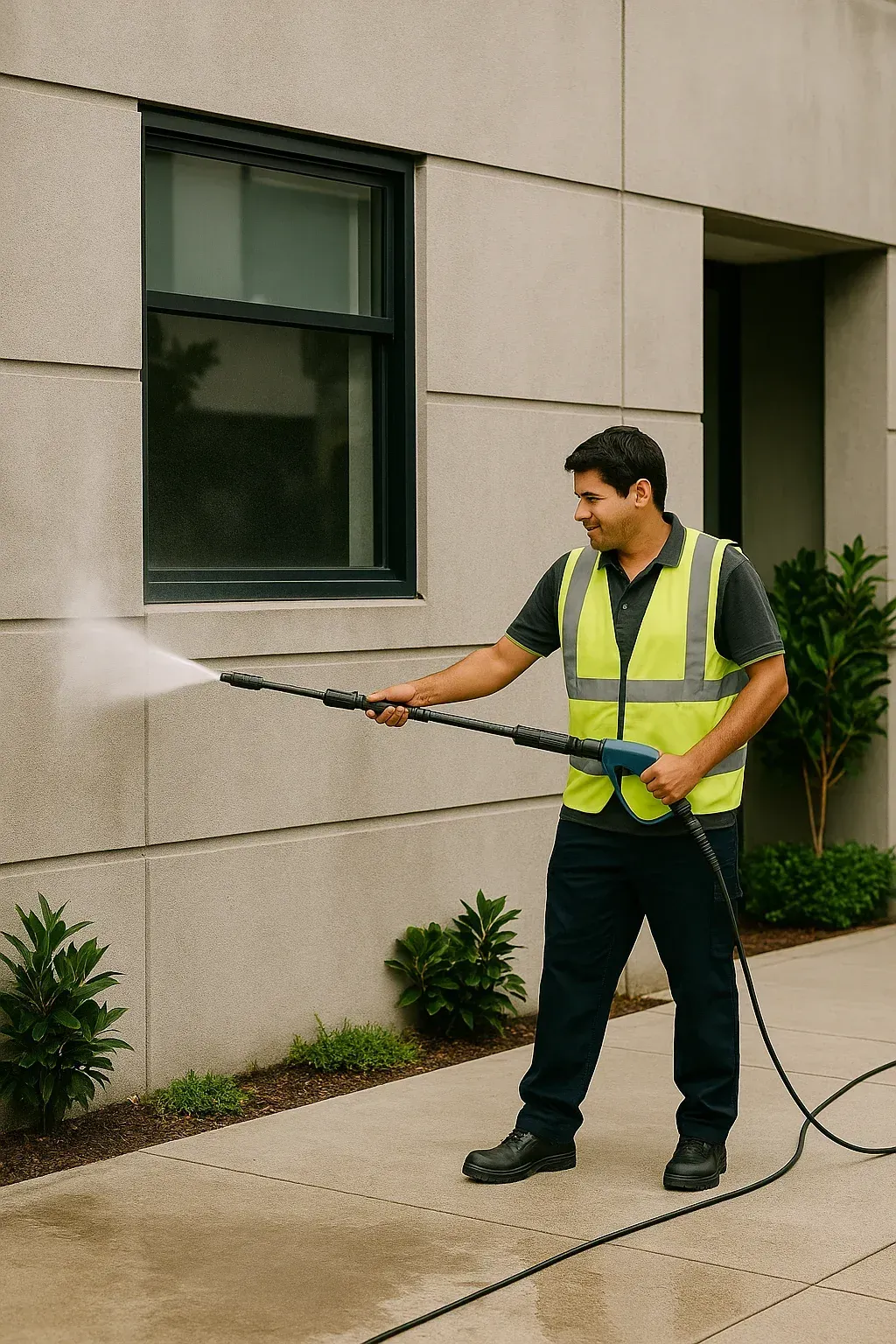
Pressure washing is routine for carparks, loading bays, warehouses and retail forecourts but creates environmental and safety obligations in Melbourne. This article summarises Victorian regulatory expectations (EPA Victoria and WorkSafe), common contaminants, practical capture and disposal options, equipment and training considerations, scheduling steps, and a concise compliance checklist and contractor brief template for site managers.
Victoria expects occupiers and contractors to take steps to prevent contaminated washwater entering the stormwater system (EPA Victoria). WorkSafe Victoria requires duty holders to manage workplace risks including pressure-washing activities; this typically includes a documented risk assessment and appropriate controls. Common controls used on Melbourne sites include drain covers, silt traps and portable wastewater capture units; select and confirm controls based on a site-specific risk assessment and disposal arrangements before work starts.
Stormwater in Melbourne drains to creeks, rivers and Port Phillip Bay. Contaminated runoff from commercial sites can pollute waterways and harm aquatic life. EPA Victoria expects occupiers and contractors to take reasonable steps to prevent pollution entering the stormwater system; failure to manage runoff can lead to regulatory action (see EPA Victoria guidance linked below). Use EPA guidance to determine when containment, testing or notification is needed for a particular site.
Typical contaminants from commercial pressure washing include:
Even clear-looking water can be contaminated. Where oil, heavy metals or hazardous residues are possible, arrange testing and consult EPA, the local council or an environmental consultant to determine whether captured effluent must be handled as trade waste or require licensed disposal; this is a site-specific determination rather than an automatic legal classification stated here.
Primary references for planning pressure-washing in Melbourne:
When planning, clearly separate statutory duties (EPA/WorkSafe requirements) from technical guidance or good-practice measures (equipment standards and agency recommendations). Where in doubt about legal obligations for disposal or permits, contact EPA Victoria or the relevant local council.
Choose controls based on contaminant risk, site layout and any local regulatory requirements. Common measures used on Melbourne sites include:
Verification steps: document the chosen capture method on the job sheet, label containers, keep disposal receipts and sample effluent where contaminant presence is uncertain. For sites with suspected heavy-metal or hazardous contamination, engage an environmental consultant and confirm regulatory expectations before disposal.
Scheduling steps that reduce environmental and public risk:
WorkSafe Victoria expects duty holders to conduct a documented risk assessment and implement a safe system of work. Key elements to include in briefs and checks (recommended to meet WorkSafe duties):
Equipment: select commercial high-pressure cleaners built and maintained to recognised safety standards (refer to AS/NZS 60335.2.79 for construction and safety features). Match pressure and nozzle type to the surface based on a site-specific assessment, ensure leak-control and safety devices are fitted, maintain service records and carry out pre-use checks.
Chemicals: prefer low-environmental-impact detergents where they meet cleaning needs. Ask contractors for Safety Data Sheets (SDS) and indicate minimal-strength formulations where appropriate. Do not rely solely on marketing terms such as 'biodegradable'—check the SDS and, for sites with significant contamination risk, seek environmental advice. Standards and agency guidance do not prescribe chemical formulations; selection should be a site-specific, documented decision.
Contact EPA Victoria or the relevant local council early if washwater cannot be practically contained on-site or if effluent is suspected to contain oils, hazardous chemicals or elevated heavy metals. Requirements vary by material and municipality; confirm whether a permit, trade-waste agreement or alternative disposal route is required. Keep records of notifications, sampling results and disposal receipts to demonstrate due diligence if inspected.
Record-keeping suggestions: date/time of works, weather, crew names, equipment used (make/model and pressure setting), capture/treatment method, destination of disposed wastewater and copies of disposal manifests or laboratory results.
Concise pre-job checklist:
Contractor brief template (adapt as required):
Primary call to action (compliance-first): Request a Melbourne site compliance quote at commercial pressure cleaning services.
Primary references:
If washwater could reach the stormwater system or contains detergents, oils, paint residues or other pollutants, EPA Victoria expects steps be taken to prevent discharge; many commercial jobs will require capture. Use a site assessment and consult EPA or the local council if unsure.
Contact them early where containment is not feasible or where hazardous or unknown contaminants are present. Check EPA guidance and confirm local council requirements for your municipality.
Operators should have documented training on high-pressure equipment, PPE including eye/face protection, waterproof protective clothing and non-slip footwear, and instruction on exclusion zones and spill response per WorkSafe Victoria guidance; retain training records as part of your site documentation.
Ask for the SDS to confirm environmental hazards and suitability for the surface and contaminants. Do not rely solely on marketing claims; for sites with significant contamination risk seek environmental advice.
Get a free, no-obligation quote. Fixed price, same team every visit, no lock-in contracts.
