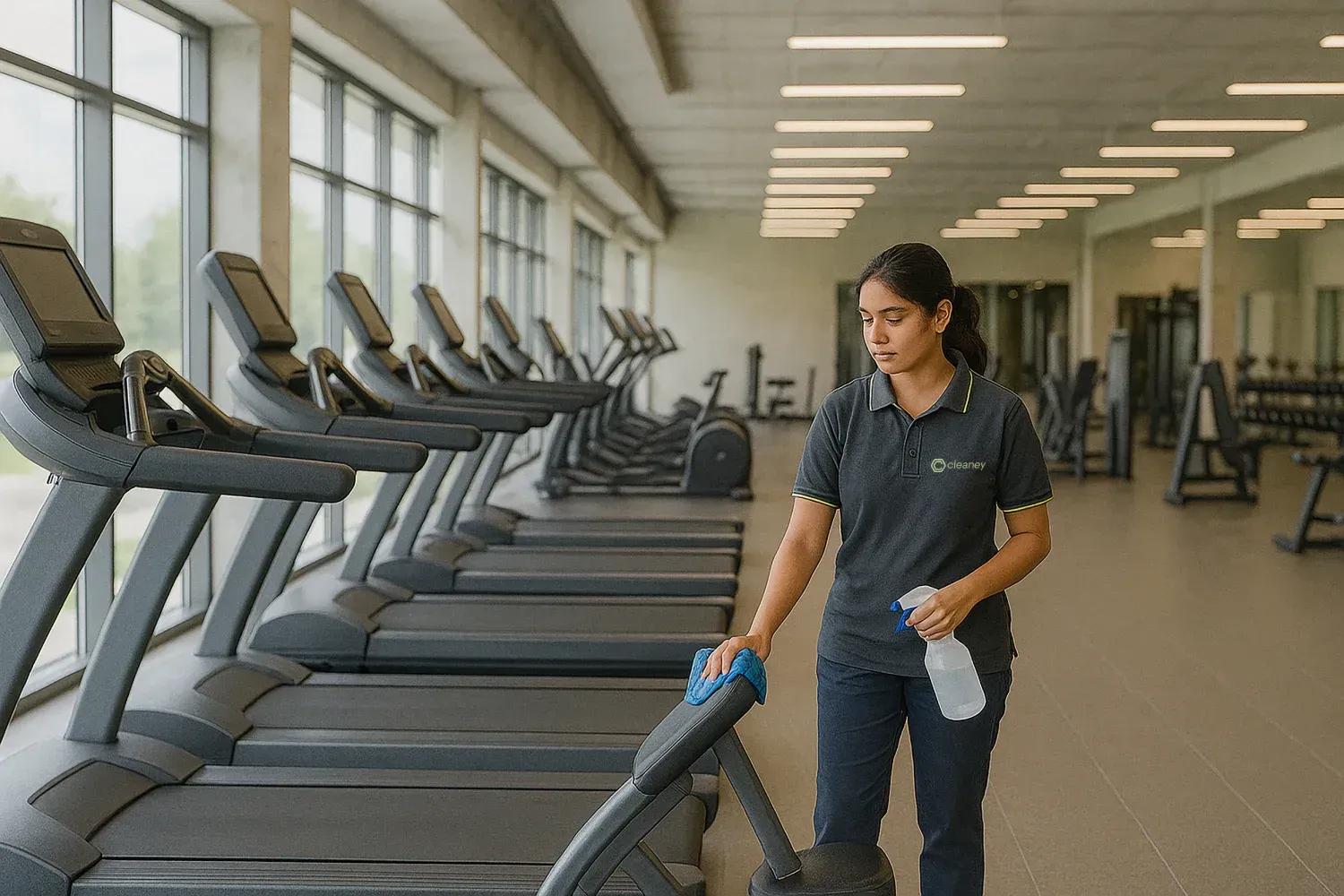
This practical guide helps gym operators, cleaning supervisors and health-and-safety officers design risk-based cleaning schedules that align equipment zones with member traffic. It provides CLEANEY operational recommendations and templates that reference national guidance on hygiene principles (Safe Work Australia; Australian Government Department of Health) and industry practice. These examples are starting points only — individual facilities must adapt schedules to their size, layout, occupancy and applicable state/territory workplace laws. For statutory obligations consult state/territory WHS regulators and the sources listed in Regulatory considerations. CLEANEY recommendations in this article are illustrative operational practices and are not regulator mandates.
View the gym as a set of zones where risk is governed by contact frequency, surface type and cleaning access. Use a three-tier approach as an operational tool (high/medium/low) and document this on a colour-coded floor plan. The zone definitions below are CLEANEY operational recommendations to be adapted to each facility.
Map entrances, toilets/lockers, cardio rows, free-weight islands and studios. Group items by material (rubber mats, vinyl upholstery, stainless steel, painted metal, glass). This zoning map underpins task allocation and shift handovers.
Use illustrative traffic profiles as starting templates to convert risk tiers into cleaning frequency ranges. These are operational templates only; they are not regulator-prescribed schedules.
Action (CLEANEY example): gather a baseline of entry-count data — for example, two weeks of counts, grouped in 30-minute intervals — to define your facility's actual peak windows. Choose a period and interval length that your systems can reliably support, and base final schedules on these local data.
The frequencies below are illustrative operational examples aligned with the principle in Department of Health and Safe Work Australia guidance to prioritise high-touch surfaces and increase cleaning during periods of higher use. These are NOT regulatory mandates and must be validated locally.
Note: increase frequency for vulnerable-user sessions or when public-health advice indicates elevated transmission risk (e.g., outbreak). Always follow product labels and regulator guidance for disinfection procedures.
Organise shifts to align cleaning presence with peak windows and reserve low-traffic times for deeper cleaning. The following are CLEANEY operational recommendations (not legal requirements); verify against your local WHS obligations.
Sample handover checklist (template provided): time-stamped confirmation of completed high-touch wipes in peak windows; notes on equipment faults or supply shortages; spot-check results and corrective actions. Include contractor windows in the roster for weekly/quarterly tasks and link to relevant commercial services for deep-clean tasks where appropriate.
Match cleaning products to surface types and follow manufacturer instructions and Safety Data Sheets (SDS). High-level points:
Safety & PPE: provide gloves and eye protection where splashes are possible, ensure staff are trained on SDS and never mix chemicals. This article does not endorse specific brands; consult product labels and local legislation.
Keep auditable KPIs and use them to scale schedules. Suggested monitoring methods (examples):
Scale-up rules (operational example): when checklist failures, increased complaints or higher occupancy occur, increase wipe frequency, add short peak shifts or redeploy staff to high-traffic zones. Reassess the zoning map after layout changes or quarterly.
Legal duties for workplace health and safety are determined by state and territory laws. Safe Work Australia and the Department of Health provide national model guidance and cleaning/disinfection advice; Standards Australia publishes consensus standards that may inform hygiene management. Model guidance and standards inform good practice but do not in themselves create statutory obligations — operators must consult their applicable state/territory WHS legislation and regulators.
Facilities must consult local WHS regulators and legal advisers for statutory obligations. For facility-level hygiene guidance see Gym & fitness-centre hygiene standards.
Suggested implementation steps (templates available):
Gated downloadable assets (consider making essential safety tables non-gated): zoning map PDF, editable shift roster (Excel/CSV) and cleaning-log templates. Gating should not withhold critical statutory or safety information.
Map your floor, collect a short baseline of entry/usage data, create a trial roster using the templates, run a pilot during typical peak days, then review KPIs and member feedback to refine routines. Coordinate periodic deep-clean contractor windows to minimise disruption and include contractor deliverables in handover records.
When the schedule is ready to become a site-specific scope, request a gym cleaning quote from CLEANEY.
Implement frequent spot wipes during identified peak windows and determine exact intervals from local usage data and audits; follow Department of Health guidance for cleaning high-touch surfaces.
Avoid indiscriminate bleach use on upholstery and coloured surfaces. Follow manufacturer care instructions, test an inconspicuous area, and use disinfectants compatible with the material per product labels and SDS. Confirm applicable regulatory guidance for your product.
Track checklist completion, spot-check audit results, member cleanliness complaints per 1,000 visits, and supply stock-outs. Establish targets from your baseline data; validate numeric targets locally.
Use a rapid between-class wipe checklist for instructors/attendants covering mats and shared props; define the scope and time allowance locally and require cleaner verification recorded in the handover log.
Get a free, no-obligation quote. Fixed price, same team every visit, no lock-in contracts.
